With winter now behind us, it’s time to take care of your snow blower before you put it to bed for the summer.
Here are a few tips to make sure your snow blower is ready for next season. (Always refer to your snow blower’s owner’s manual for the manufacturer’s recommendations.)
The snow blower pictured below is an Ariens Deluxe 28 SHO, model 921044.
1. Do an end of season tune-up. First change the oil.


Next, inspect and clean or replace the spark plug. If you’re not sure that the spark plug is okay, then replace it.


2. Drain the fuel from your snow blower’s fuel tank and run the machine dry. Fill the tank with a bottle of ethanol free fuel treated with fuel stabilizer. Start the snow blower again and run the engine for about 5 minutes to let the fuel circulate through the carburetor. Shut off the fuel supply switch while the engine is running and allow it to stop on its own. All fuel breaks down over time and the ethanol free fuel treated with fuel stabilizer will help to prevent this from happening. (All fuel from the gas station contains ethanol (E10) and ethanol attracts water from the air around it. If you simply run the machine dry, a small amount of this fuel remains in the fuel lines and carburetor and can cause all sorts of fuel related problems after sitting for a few months.)


3. Inspect the skid shoes and scraper bar for excessive wear. These components help to prevent damage to the snow blower’s bucket, so inspecting them and replacing as needed is important. If you start to see scrape marks on the bucket or if the bolts holding the scraper bar show rub marks from contact with the ground, it’s time to replace the scraper bar. If the skid shoes are very thin or have rubbed completely through, it’s time to replace the skid shoes.


4. Check the drive components for excessive wear. Specifically, you want to make sure the rubber friction disc isn’t cracked or excessively chipped. If you noticed a lack of drive power this past season, this might be the problem.


5. Remove the belt cover and check for cracks in your belts. Replace any belts that are excessively worn or cracked. Inspecting and replacing now will help prevent a broken belt while you’re snow blowing next season.


6. Inspect drive and auger cables for excessive play and adjust as needed. As with the friction disk in bullet 4, if you noticed a lack of drive power or snow throwing power this might be the issue.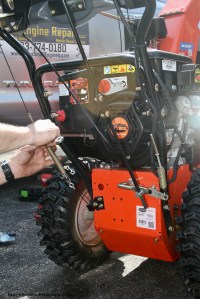
7. Wash your machine to get salt, dirt and grime off of your snow blower. This will help reduce rust.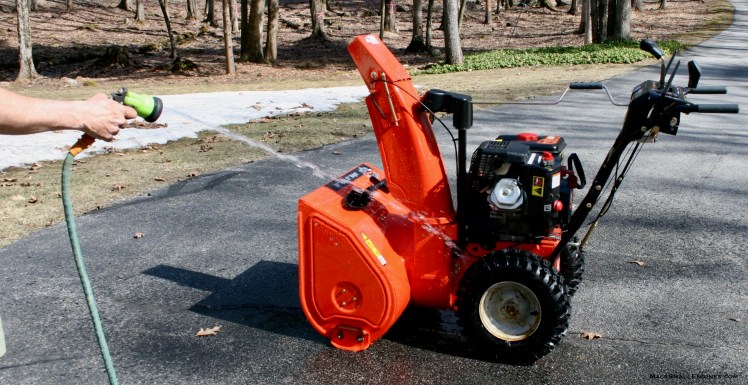
8. Wax the snow blower’s chute. This will also help to prevent rust and if you wax the inside of the chute during the snow season it can help to reduce snow build up in the chute.
9. If you choose to cover your snow blower, do not make it air tight. You want air to circulate under the cover so that any moisture buildup under the cover is able to dry out.
If you find you need any end-of-season maintenance, give us a call. We’re here to help.
 macssmallengines.com